
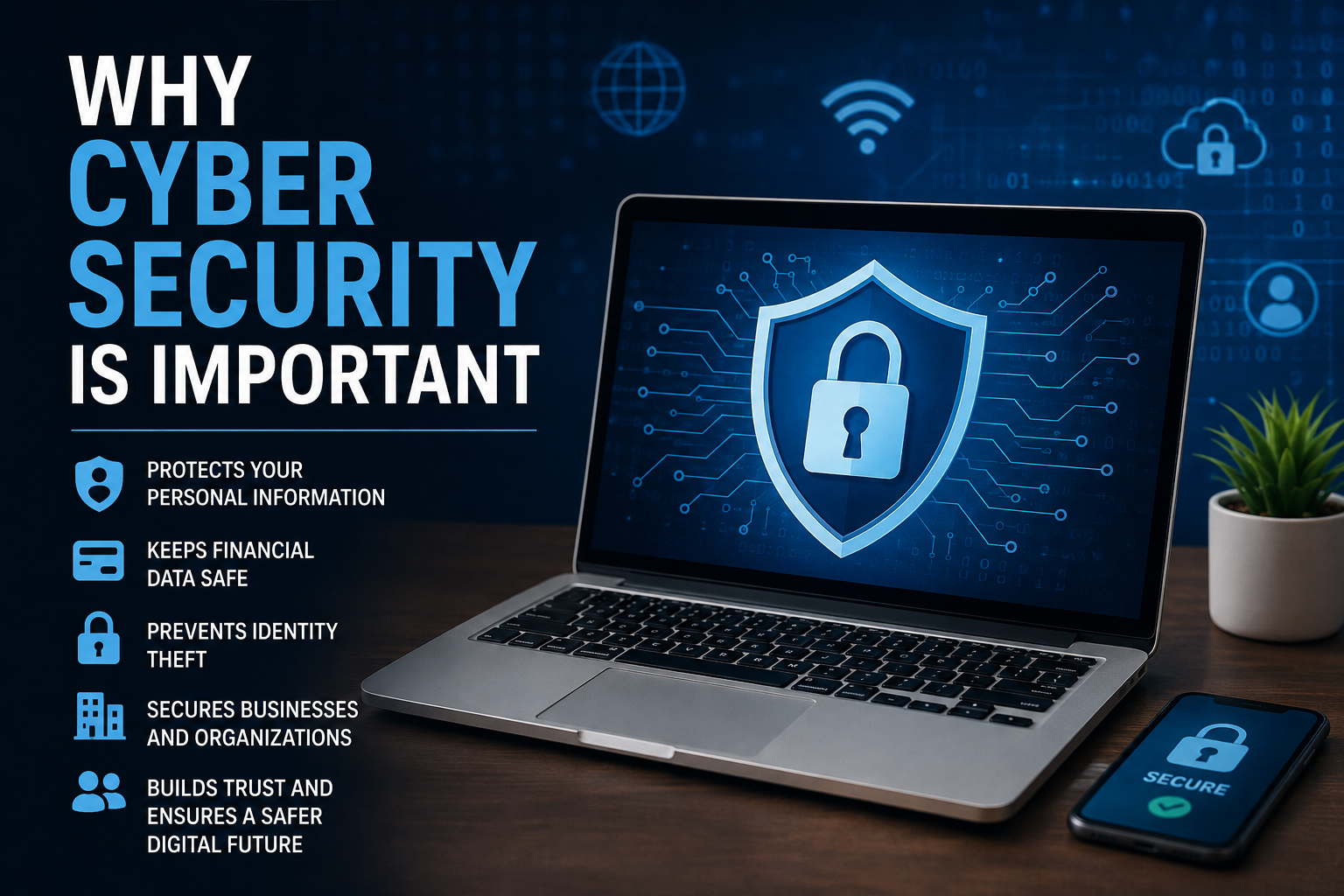
In today’s digital world, almost everything I do depends on the internet. I use it to communicate with friends, manage my finances, shop online, work, study, and even store personal memories like photos and videos. Technology has made life easier in many ways, but it has also created new risks that many people underestimate. Every day, cyber criminals look for opportunities to steal personal information, damage systems, and trick innocent people into giving away valuable data. That is why I believe cyber security is no longer something that only large companies need. It is something that every internet user should understand and take seriously.
Cyber security is important because it protects our personal information, financial accounts, businesses, and digital lives from cyber threats. As technology continues to evolve, cyber attacks are becoming more advanced. If we fail to protect ourselves, the consequences can be expensive, stressful, and sometimes impossible to reverse. From my point of view, learning about cyber security is one of the smartest investments anyone can make in today’s connected world.
Protecting Personal Information
One of the biggest reasons cyber security matters is because it protects personal information. Every time I create an account on a website, I provide details such as my name, email address, phone number, and sometimes my home address. Many websites also store payment information and other sensitive data.
If hackers gain access to this information, they can misuse it in many ways. They might steal identities, open fake accounts, or commit financial fraud. Recovering from identity theft can take months or even years. Strong cyber security practices help reduce these risks by protecting personal data from unauthorized access.
I believe everyone should treat their personal information like cash. Just as I would never leave my wallet lying around in a public place, I should never leave my digital information unprotected.
Keeping Financial Information Safe
Online banking and digital payments have become a normal part of daily life. I can pay bills, transfer money, and purchase products within minutes. While this convenience is amazing, it also attracts cyber criminals.
Hackers constantly attempt to steal banking credentials, credit card numbers, and payment information. A single successful attack can result in significant financial losses.
Cyber security protects financial data through secure encryption, authentication systems, and safe online practices. Using strong passwords, enabling two factor authentication, and avoiding suspicious websites all play an important role in keeping money safe.
For me, protecting my financial information is one of the strongest reasons to learn about cyber security.
Preventing Identity Theft
Identity theft is becoming more common every year. Criminals can use stolen personal information to pretend to be someone else. They may apply for loans, create fake social media profiles, or make purchases using another person’s identity.
Victims often spend a long time proving they were not responsible for these activities. This process can be stressful and emotionally exhausting.
Cyber security helps reduce the chances of identity theft by protecting sensitive information before criminals can access it. I believe preventing identity theft is much easier than trying to recover from it later.
Protecting Businesses From Financial Loss
Businesses of every size depend on technology. Customer records, employee information, financial reports, and business operations are often stored digitally.
A successful cyber attack can shut down operations, damage customer trust, and cost thousands or even millions of dollars. Small businesses are especially vulnerable because many assume hackers only target large corporations.
In reality, cyber criminals often target smaller companies because they may have weaker security systems.
From my perspective, investing in cyber security is far less expensive than dealing with the damage caused by a data breach.
Building Customer Trust
Customers expect businesses to protect their information. Whenever I purchase something online, I trust that my payment details and personal information will remain secure.
If a company experiences a data breach, many customers lose confidence and choose another business. Trust takes years to build but only minutes to destroy.
Good cyber security demonstrates that a company values customer privacy and takes responsibility for protecting sensitive information. This trust can become a valuable competitive advantage.
Protecting Remote Work
Remote work has become increasingly common around the world. Employees often access company systems from home using personal devices and internet connections.
While remote work offers flexibility, it also introduces new security challenges. Home networks may not be as secure as corporate networks, making them attractive targets for attackers.
Cyber security provides secure connections, encrypted communications, and access controls that help remote employees work safely from anywhere.
As someone who understands how technology connects us, I believe secure remote work will remain an essential part of modern business.
Defending Against Ransomware
Ransomware is one of the most dangerous cyber threats today. It is a type of malicious software that locks files or entire computer systems until a ransom payment is made.
Many businesses, hospitals, schools, and government organizations have suffered from ransomware attacks. These attacks can stop important services and create major financial losses.
Strong cyber security measures such as regular backups, software updates, and employee awareness training significantly reduce the risk of ransomware infections.
Prevention is always better than paying criminals and hoping they restore access.
Protecting National Security
Cyber security is not only important for individuals and businesses. Governments also depend on secure digital systems.
Critical infrastructure such as electricity, transportation, healthcare, communication networks, and water supplies all rely on technology. If attackers successfully target these systems, entire communities can be affected.
National cyber security helps defend countries against cyber espionage, cyber terrorism, and attacks on essential services.
Although most people never directly see these security measures, they play an important role in keeping society safe.
Supporting Online Education
Students and teachers increasingly rely on online learning platforms. Educational institutions store personal records, examination results, and research data.
Cyber attacks on schools and universities can disrupt learning and expose sensitive student information.
Cyber security protects educational systems by preventing unauthorized access and keeping digital classrooms safe.
As online education continues growing, security becomes even more important.
Protecting Healthcare Systems
Healthcare organizations manage highly sensitive medical records. Patients trust hospitals to keep their personal and medical information confidential.
A cyber attack against a hospital can delay treatments, interrupt emergency services, and expose private medical data.
Cyber security helps healthcare providers protect patient records while ensuring doctors and nurses can safely access critical information when needed.
Lives may literally depend on secure digital systems.
Reducing Human Error
Many cyber attacks succeed because of simple human mistakes. Someone might click a fake email, download an infected attachment, or reuse the same password across multiple websites.
Cyber security education teaches people how to recognize suspicious activity before it becomes a serious problem.
I believe awareness is one of the most powerful forms of protection. The more people understand cyber threats, the fewer opportunities criminals have to succeed.
Encouraging Safe Internet Habits
Cyber security is not only about software and technology. It is also about developing smart online habits.
Some simple habits include creating strong passwords, updating software regularly, avoiding unknown links, using secure websites, and enabling two factor authentication.
These habits may seem small, but together they provide strong protection against many common cyber attacks.
I try to think of cyber security as part of my daily routine rather than something I only consider after a problem occurs.
Protecting the Future
Technology continues to evolve rapidly. Artificial intelligence, cloud computing, smart homes, connected vehicles, and the Internet of Things are becoming more common every year.
While these innovations improve our lives, they also create new security challenges.
Cyber security will continue evolving to protect these technologies from emerging threats. Learning cyber security today prepares individuals and businesses for the future.
The digital world will only become more connected, making security even more valuable.
Simple Ways to Improve Cyber Security
Anyone can improve their online security by following a few basic practices.
Use unique passwords for every account.
Enable two factor authentication whenever possible.
Keep software and operating systems updated.
Avoid clicking suspicious emails and unknown links.
Download applications only from trusted sources.
Back up important files regularly.
Use reliable antivirus software.
Stay informed about the latest cyber threats.
These simple actions can significantly reduce the risk of becoming a cyber crime victim.
Conclusion
From my point of view, cyber security is one of the most important skills people can develop in today’s digital age. Almost every aspect of modern life depends on technology, which means protecting digital information has become a personal responsibility. Whether I am using social media, shopping online, working remotely, or managing my finances, cyber security helps keep my information safe from criminals who are constantly searching for new opportunities.
The importance of cyber security will only continue growing as technology becomes more advanced. Individuals, businesses, governments, schools, and healthcare organizations all rely on secure digital systems to operate successfully. By understanding cyber threats and following safe online practices, we can protect our personal information, reduce financial risks, maintain privacy, and build a safer digital future for everyone. In my opinion, cyber security is not just about defending computers. It is about protecting our identities, our opportunities, and the trust we place in the digital world every single day.
