In today’s digital world, almost everything we do depends on the internet. We use online banking, social media, email, cloud storage, and many other digital services every day. While these technologies make life easier, they also create opportunities for cybercriminals to target individuals and businesses. That is why I believe everyone should understand the different types of cyber attacks and learn how they work.
Cyber attacks are becoming more common every year. They can affect anyone, whether you are a student, a freelancer, a business owner, or simply someone who enjoys browsing the internet. The good news is that understanding these attacks is the first step toward protecting yourself.
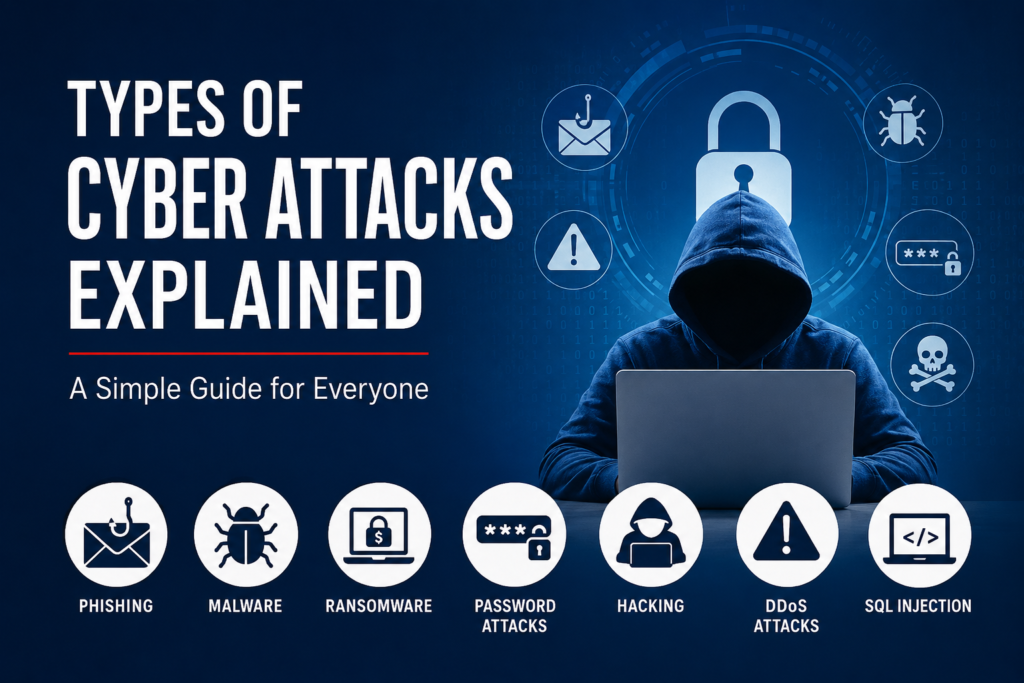
In this article, I will explain the most common types of cyber attacks in simple language so that even beginners can easily understand them.
What Is a Cyber Attack
A cyber attack is an attempt by a hacker or cybercriminal to gain unauthorized access to a computer, network, website, or online account. The purpose of these attacks can vary. Some attackers want to steal personal information, while others want money or simply enjoy causing damage.
Cyber attacks can lead to financial loss, identity theft, data leaks, and even business shutdowns. That is why learning about them is so important.
Phishing Attack
One of the most common cyber attacks is phishing. I think this is also one of the easiest attacks for beginners to understand because most people have received suspicious emails or messages at least once.
In a phishing attack, hackers pretend to be a trusted company, bank, or government organization. They send fake emails or text messages asking you to click a link or provide sensitive information.
For example, you may receive an email saying that your bank account has been locked and you need to log in immediately. The provided link actually takes you to a fake website where your username and password are stolen.
To avoid phishing attacks, always check the sender’s email address, avoid clicking unknown links, and verify information directly from the official website.
Malware Attack
Malware is a general term used for harmful software designed to damage computers or steal information.
Hackers often spread malware through infected email attachments, fake software downloads, or unsafe websites.
There are different types of malware, including viruses, worms, spyware, adware, and ransomware.
Once malware enters your device, it may slow down your computer, steal passwords, monitor your activities, or even delete important files.
Installing trusted antivirus software and keeping your operating system updated can reduce the risk of malware infections.
Ransomware Attack
Ransomware has become one of the most dangerous cyber threats in recent years.
In a ransomware attack, hackers lock or encrypt your files so you cannot access them. They then demand money in exchange for restoring your data.
Sometimes even after paying the ransom, victims never receive their files back.
Businesses, hospitals, schools, and government organizations have all experienced ransomware attacks.
The best protection against ransomware is maintaining regular backups, avoiding suspicious downloads, and keeping security software updated.
Password Attack
Weak passwords make life much easier for hackers.
A password attack involves trying to guess or steal login credentials. Cybercriminals use different methods such as guessing common passwords, using stolen password databases, or automated software that tests thousands of password combinations.
If you use simple passwords like 123456 or password, your accounts become easy targets.
I always recommend creating strong passwords that include uppercase letters, lowercase letters, numbers, and special characters. Using a password manager can also help generate secure passwords.
Denial of Service Attack
A Denial of Service attack, commonly called a DoS attack, is designed to make a website or online service unavailable.
The attacker floods the server with an overwhelming amount of traffic until it becomes unable to respond to legitimate users.
When many infected devices work together in the attack, it is called a Distributed Denial of Service attack, or DDoS attack.
Large companies, online stores, gaming platforms, and financial institutions often become victims of these attacks.
Although these attacks usually do not steal information directly, they can cause significant financial losses by making websites inaccessible.
Man in the Middle Attack
A Man in the Middle attack happens when a hacker secretly intercepts communication between two people or systems.
Imagine you are using free public WiFi at a coffee shop. If the network is not secure, a hacker may capture the information you send over the internet.
This could include login credentials, banking information, or personal messages.
Using secure websites that begin with HTTPS and avoiding sensitive activities on public WiFi can greatly reduce this risk.
SQL Injection Attack
Many websites use databases to store customer information.
In an SQL Injection attack, hackers exploit weaknesses in website forms or search boxes by inserting malicious database commands.
If the website lacks proper security, the attacker may gain access to confidential information stored in the database.
Website developers should always validate user input and use secure coding practices to prevent SQL Injection attacks.
Cross Site Scripting Attack
Cross Site Scripting, often called XSS, targets website visitors instead of the website itself.
Hackers inject malicious scripts into web pages. When users visit the infected page, the script runs inside their browser.
This can steal cookies, session information, or login credentials.
Website administrators can reduce this risk by filtering user input and applying proper security measures.
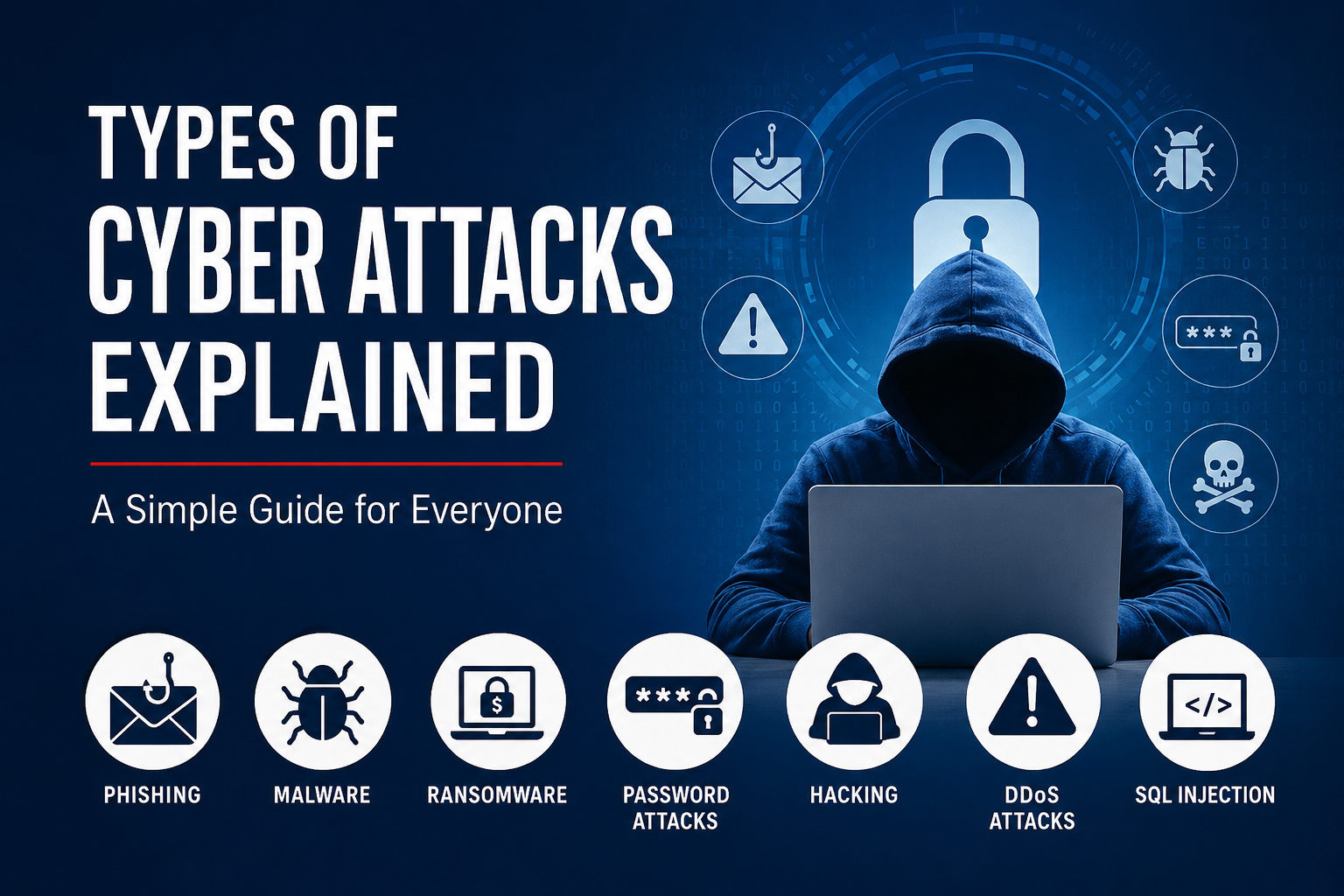
Types of Cyber Attacks Explained
Zero Day Attack
A Zero Day attack is one of the most dangerous cyber attacks because it takes advantage of a software vulnerability before the software developer has released a fix. Since there is no available security patch at the time of the attack, hackers have a better chance of successfully exploiting the weakness.
I believe Zero Day attacks are especially dangerous because even users who follow good security practices can become victims. Cybercriminals often target businesses, government organizations, and large companies using these vulnerabilities. The best way to reduce the risk is to keep all software updated because security patches are released as soon as developers discover the problem.
Brute Force Attack
A Brute Force attack is another common method hackers use to break into online accounts. Instead of stealing passwords directly, they use automated software that tries thousands or even millions of password combinations until the correct one is found.
Accounts with weak passwords are the easiest targets. Passwords such as 123456, password, or your birth date can often be guessed within seconds.
I always recommend using long and unique passwords for every account. Enabling two factor authentication also adds an extra layer of protection. Even if someone discovers your password, they still cannot access your account without the second verification step.
Social Engineering Attack
Not every cyber attack depends on advanced technology. Some attacks focus on manipulating people instead of computers. This is known as social engineering.
Hackers may pretend to be technical support staff, company employees, or trusted friends. They create situations that make victims feel scared, excited, or rushed into making a mistake.
For example, someone may call pretending to be from your bank and ask for your account details to verify your identity. Many people unknowingly share sensitive information because the caller sounds professional.
I think awareness is the strongest defense against social engineering. Always verify a person’s identity before sharing passwords, personal information, or financial details.
Botnet Attack
A botnet is a network of infected computers that are secretly controlled by a hacker. Most users do not even realize their devices have become part of a botnet.
Hackers use botnets to launch massive cyber attacks, send spam emails, spread malware, or perform Distributed Denial of Service attacks.
An infected computer may continue working normally while secretly helping cybercriminals attack other systems.
Keeping antivirus software updated and avoiding suspicious downloads can help prevent your device from becoming part of a botnet.
DNS Spoofing Attack
The Domain Name System works like the internet’s phone book by converting website names into IP addresses.
In a DNS Spoofing attack, hackers manipulate this process and redirect users to fake websites that look almost identical to legitimate ones.
A person may believe they are logging into their bank account while actually entering their credentials into a fake website controlled by attackers.
Checking website addresses carefully and making sure the connection is secure before entering sensitive information can help prevent this type of attack.
Drive By Download Attack
A Drive By Download attack happens when malware is automatically downloaded onto your device simply by visiting a compromised website.
In many cases, the victim does not even click a download button. Outdated browsers or plugins may contain vulnerabilities that allow malware to install automatically.
This is one reason why I believe keeping browsers and software updated is extremely important. Regular updates often include security fixes that block these attacks.
Fileless Malware Attack
Fileless malware is different from traditional malware because it does not rely on installing files on your computer.
Instead, it uses legitimate system tools that already exist in the operating system. This makes it much harder for traditional antivirus software to detect.
Cybercriminals use fileless malware to steal information, monitor activities, and maintain unauthorized access without leaving obvious traces.
Modern endpoint security solutions and regular system monitoring provide better protection against these advanced attacks.
Insider Threat Attack
Sometimes the biggest security threat comes from inside an organization.
An insider threat occurs when an employee, contractor, or business partner intentionally or accidentally exposes sensitive information.
Some insiders steal confidential data for financial gain, while others simply make mistakes by clicking malicious links or sharing information with unauthorized people.
Organizations should educate employees about cybersecurity and limit access to sensitive information based on job responsibilities.
How to Stay Safe From Cyber Attacks
Understanding cyber attacks is only useful if we also know how to protect ourselves. Fortunately, many cyber attacks can be prevented by following simple security habits.
Always use strong and unique passwords for every account.
Enable two factor authentication whenever it is available.
Keep your operating system, browser, and applications updated.
Install trusted antivirus software.
Avoid downloading files from unknown websites.
Never click suspicious email links or attachments.
Back up important files regularly.
Use secure internet connections and avoid entering sensitive information on public WiFi.
Verify the identity of anyone requesting personal or financial information.
Stay informed about new cybersecurity threats because hackers constantly develop new techniques.
Final Thoughts
Cyber attacks are becoming more advanced every year, but that does not mean we should live in fear. I believe knowledge is one of the most powerful tools for protecting ourselves online. Once we understand how different cyber attacks work, we become much better at recognizing suspicious activity before it causes serious damage.
Whether it is phishing, ransomware, malware, brute force attacks, social engineering, or Zero Day exploits, every attack follows a similar goal of stealing information, damaging systems, or making money through illegal activities.
By practicing good cybersecurity habits, staying alert, and keeping our devices updated, we can significantly reduce the chances of becoming victims. The internet offers incredible opportunities, but it also requires responsibility. Learning about cyber attacks is not just important for cybersecurity professionals. It is something every internet user should understand to enjoy a safer and more secure digital life.