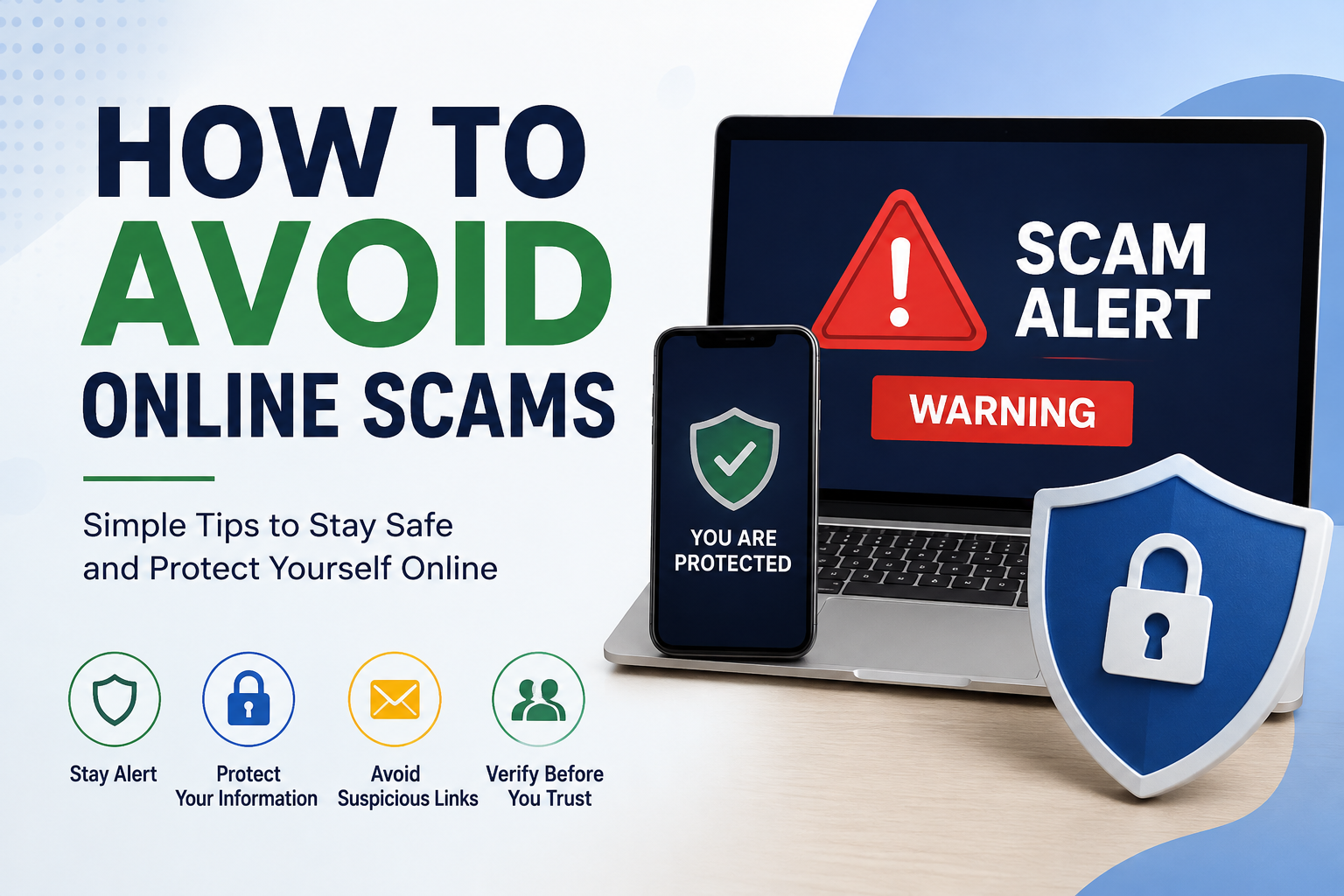
The internet has become a part of my daily life. I use it to work, study, shop, communicate with friends, and manage important accounts. While the internet has made life easier in many ways, it has also created opportunities for scammers. Every day, thousands of people lose their money, personal information, and online accounts because they trust the wrong website, email, or message.
I believe that avoiding online scams is not difficult if we stay alert and learn how scammers usually operate. Most scams succeed because they create fear, excitement, or urgency. They want people to make quick decisions without thinking carefully. Over time, I have realized that spending just a few extra minutes to verify something can save me from serious financial loss and identity theft.
In this article, I will share the practical methods I personally follow to avoid online scams and stay safe while using the internet.
What Are Online Scams?
Online scams are fraudulent activities designed to trick people into giving away money, passwords, banking details, or personal information through the internet. Scammers use emails, text messages, social media, fake websites, phone calls, online advertisements, and even messaging apps to fool their victims.
Their goal is always the same. They want to gain something valuable by pretending to be someone trustworthy. Sometimes they act like banks, online stores, government organizations, delivery companies, or even friends and family members.
Why Online Scams Are Increasing
As more people rely on digital services, scammers have found more opportunities to target internet users. Online shopping, digital banking, cryptocurrency, and social media have all become attractive platforms for cybercriminals.
Modern scammers are also becoming smarter. Many fake websites look almost identical to genuine ones. Scam emails often contain professional logos and convincing language. Some scammers even use artificial intelligence to create realistic messages and fake voices.
Because of these improvements, anyone can become a target regardless of age or technical knowledge.
Learn to Recognize Common Types of Scams
The first step in protecting myself is understanding the different scams that exist.
Phishing emails try to convince users to click dangerous links or enter login credentials on fake websites.
Fake shopping websites advertise products at unbelievably low prices to attract buyers who never receive their orders.
Lottery scams tell people they have won a prize even though they never entered a competition.
Investment scams promise huge profits with little or no risk.
Romance scams build emotional relationships before asking for money.
Technical support scams claim that a computer has been infected and ask users to pay for unnecessary repairs.
Job scams offer fake employment opportunities while asking applicants to pay registration fees or provide sensitive information.
Once I learned how these scams work, spotting them became much easier.
Never Trust Messages That Create Panic
One lesson I always remember is that scammers love creating panic.
I have seen emails saying my account will be suspended within one hour. Others claim that my bank account has been locked or that a package cannot be delivered unless I immediately click a link.
Whenever I receive a message like this, I stop and think before taking any action. Genuine companies usually provide multiple ways to contact them and rarely pressure customers into making instant decisions.
If something sounds urgent, I verify it by visiting the company’s official website directly instead of clicking links inside the message.
Check the Website Carefully
Before entering any personal information, I always inspect the website.
I check whether the web address starts with HTTPS because secure websites encrypt data during transmission.
I also carefully read the domain name. Scammers often create addresses with small spelling mistakes that many people fail to notice.
For example, replacing one letter or adding an extra character can make a fake website appear genuine at first glance.
A professional looking design does not guarantee authenticity. I always verify the web address instead of trusting appearance alone.
Avoid Clicking Unknown Links
One habit that has greatly improved my online safety is avoiding random links.
Whether the link arrives through email, text message, WhatsApp, Facebook, Instagram, or another platform, I never click it unless I know exactly where it leads.
Instead of using the provided link, I manually type the official website into my browser or search for it using a trusted search engine.
This simple habit helps me avoid phishing websites designed to steal passwords.
Create Strong and Unique Passwords
Passwords are the first line of defense for every online account.
I avoid using simple passwords like my birthday, phone number, or the word “password.”
Instead, I create long passwords using a combination of uppercase letters, lowercase letters, numbers, and special characters.
More importantly, I never reuse the same password across different accounts.
If one account becomes compromised, unique passwords help keep my other accounts safe.
Enable Two Factor Authentication
Whenever possible, I enable two factor authentication.
This security feature requires a second verification step in addition to my password.
Even if someone somehow learns my password, they still cannot access my account without the additional verification code.
I consider this one of the most effective ways to protect online accounts against unauthorized access.
Think Before Sharing Personal Information
Scammers often collect information from social media profiles.
I avoid publicly sharing details such as my full address, financial information, travel plans, identity documents, or security question answers.
The less information available online, the harder it becomes for scammers to impersonate me or guess account recovery details.
Privacy settings also help limit who can view my personal content.
Be Careful With Online Shopping
I enjoy shopping online, but I never buy from unknown websites without checking their reputation.
If a deal seems unbelievably cheap, I become suspicious.
Before making a purchase, I read customer reviews, verify contact information, and check whether secure payment options are available.
Whenever possible, I use payment methods that offer buyer protection instead of transferring money directly to unknown sellers.
Verify Before Sending Money
One important rule I follow is never sending money based only on an email or message.
Sometimes scammers pretend to be relatives asking for emergency financial help.
Others impersonate company executives requesting urgent payments.
Before transferring any money, I contact the person using another communication method to confirm the request.
This simple verification can prevent expensive mistakes.
Keep Software Updated
Software updates are not only about new features.
Many updates include important security improvements that fix vulnerabilities discovered by researchers.
I regularly update my operating system, web browser, antivirus software, and mobile applications.
Delaying updates gives cybercriminals more opportunities to exploit known weaknesses.
Install Security Software
Reliable antivirus software provides another layer of protection.
Although no security program can stop every threat, it helps detect malicious files, suspicious websites, and dangerous downloads.
Combined with careful browsing habits, security software significantly reduces online risks.
Watch Out for Fake Customer Support
Sometimes scammers display fake warning messages claiming that a device has been infected.
The message often includes a phone number and encourages immediate contact.
I never call numbers shown in unexpected popups.
Instead, I close the browser and contact the official support team through their verified website if I genuinely need assistance.
Be Cautious on Social Media
Social media platforms are full of fake profiles, giveaway scams, and fraudulent advertisements.
I avoid accepting friend requests from unknown people.
I also think carefully before participating in giveaways that ask for banking details, passwords, or upfront payments.
If an offer sounds too generous, I investigate before trusting it.
Learn to Spot Emotional Manipulation
Most scams rely on emotions rather than technology.
Some create fear by claiming accounts will be closed.
Others create excitement with fake prizes.
Romance scams use emotional attachment.
Investment scams appeal to greed by promising guaranteed profits.
Whenever I notice strong emotional pressure, I pause and evaluate the situation logically before responding.
Educate Family Members
Cybersecurity is not only about protecting myself.
I also share online safety tips with family members, especially children and older adults who may be less familiar with internet scams.
Discussing common scam techniques helps everyone recognize suspicious situations more quickly.
A well informed family becomes much harder for scammers to target.
What to Do If You Suspect a Scam
If I believe I have encountered a scam, I immediately stop communicating with the scammer.
I never provide additional information.
If I accidentally entered my password on a suspicious website, I change it immediately and enable two factor authentication if it is not already active.
If financial information may have been exposed, I contact my bank as soon as possible.
I also report suspicious emails, fake websites, or fraudulent social media accounts to help protect other users.
Taking quick action can minimize potential damage.
Final Thoughts
From my experience, the best defense against online scams is awareness. Technology continues to evolve, but scammers continue to adapt as well. No antivirus program or security tool can fully replace careful thinking and good online habits.
I have learned that staying safe online does not require advanced technical skills. It simply requires patience, attention to detail, and a willingness to verify information before trusting it. I never let urgency force me into making quick decisions, and I always question offers that seem too good to be true.
By creating strong passwords, enabling two factor authentication, checking website addresses, avoiding suspicious links, protecting personal information, and keeping software updated, I greatly reduce my chances of becoming a victim of online scams.
The internet offers incredible opportunities for learning, business, entertainment, and communication. By following smart security practices every day, I can enjoy these benefits with greater confidence while keeping my personal information, finances, and digital identity safe from cybercriminals.